
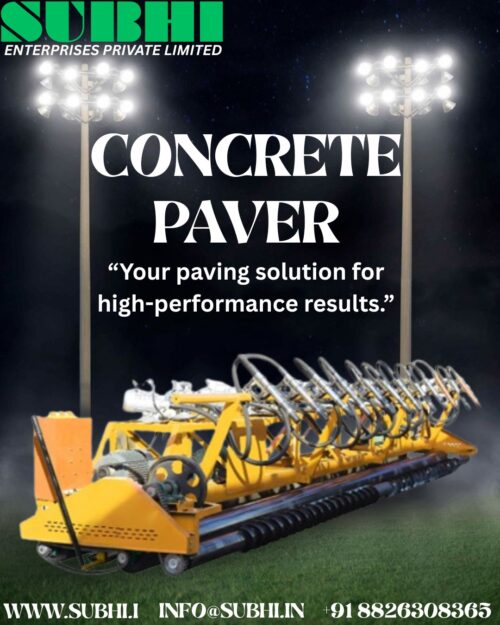
They are a key component of contemporary landscaping, building, and urban planning. With their durability, beauty, and flexibility, they offer functional and visual solutions for any application. From paving driveways, sidewalks, and patios to business properties, they provide a cost-effective and reliable solution that adds to the overall appeal of your property.
What is a concrete paver?
A specially designed block of concrete is employed to create hard surfaces. Unlike traditional poured concrete, these blocks are manufactured under controlled conditions, ensuring uniform size, shape, and strength. They may come in various shapes, colors, and textures, allowing homeowners and builders to create advanced designs and patterns of their choice.
The primary purpose of a concrete paver is to serve as a durable and hard surface able to bear heavy loads, be resistant to cracking, and hold up under environmental stress. From residential driveways to industrial parking lots, these pavers now rule the roost due to their flexibility and performance.
Different kinds
Different kinds of concrete pavers are good for different jobs.
Understanding the types will help you determine the right paver for your use:
- Interlocking Concrete Pavers
These pavers snap together like pieces of a puzzle to create a long-lasting, interlocking surface well-suited to resist heavy usage. Interlocking concrete pavers are well-suited to driveways, roads, and commercial properties.
- Permeable Concrete Pavers
Permeable pavers permit permeation of water, which eliminates the runoff of water and facilitates groundwater recharge. The environment-friendly solution is implemented on a large scale in flood-prone and waterlogging areas.
- Solid Concrete Pavers
Solid pavers give a solid ground and are generally utilized for heavy use areas. The concrete pavers are very strong and durable and can withstand heavy wear and tear.
- Decorative Concrete Pavers
They are available in varied colors, patterns, and textures, beautifying the outdoor setting. They are extensively used in patios, walkways, and pool surroundings.
Benefits
Choosing concrete pavers as an alternative to some other solution has a number of advantages:
- Perseverance
Concrete pavers are created to handle heavy loads and withstand depreciation. Unlike asphalt or regular concrete, which deteriorates with time after it has elapsed, concrete pavers can move ever so slightly under pressure without compromising their structure, meaning they’re residential and commercial grade.
- Freedom of Design
Concrete pavers are available in various shapes, colors, and textures, and thus provide endless design possibilities. You can design detailed designs, borders, or even personalized designs that are as lovely as your house.
- Easy to Maintain
Another important benefit of concrete pavers is that they are easy to maintain. If one of the pavers is damaged, it can be removed and replaced without disturbing the other areas. They do not stain and are flushed by water or mild cleaning soap.
- Environmental Benefits
Permeable pavers facilitate stormwater management by letting it seep downward, lowering runoff and erosion. The environmentally friendly aspect makes them a great choice for green projects and city-center applications.
- Longevity
Concrete pavers, if properly installed, will endure for decades.
Their longevity despite harsh weather, extreme traffic, and intense use makes them worth the investment for any piece of property.
The adaptability of concrete pavers is such that they can be adapted to a broad range of uses, some of which include:
- Residential Walks and Driveways: Pavers are strong and handsome, making an appealing, safe walking surface for home use.
- Commercial Parking Lots: Parking lots are perfectly suited for interlocking concrete pavers due to their strength and low maintenance requirements.
- Public Places and Sidewalks: Pavers allow for a smooth, safe, and durable walking surface.
- Garden Pathways and Patios: Fanciful concrete pavers beautify outdoor spaces with a stylish and durable surface.
- Pool Decks: Skid-resistant, attractive pavers are perfect for recreational areas and pool decks.
Installation Process
Blocks must be well installed and prepared to create a strong surface. The whole process is as follows:
- Site Preparation: Remove debris, grass, and existing pavement. Grading must be accurate for drainage.
- Base Layer: Use a solid foundation of crushed gravel or stone to provide strength and stability.
Sand Bedding: Apply a coarse sand layer to ensure proper leveling and make it easy to lay the blocks. - Block Installation: Place the blocks in the desired pattern, close to each other with equal spacing.
- Joint Sealing: Fill the spaces between the blocks with sand or polymeric sand to keep them in place.
- Compaction: Compact with a plate compactor to lock the blocks into place and create a hard surface.
These blocks work better and last longer when they are installed correctly.
Concrete Paver Maintenance Tips
Pavers are simple to maintain, but a little care will extend their life:
- Daily Cleaning: Hose or broom the pavers free of leaves, dirt, and debris.
- Weed Suppression: Spray weed killer or fill joints with polymeric sand to suppress weeds.
- Sealants: Seal pavers to prevent staining, impart color, and reduce water absorbency.
- Fix Damaged Pavers: Replace or repair any cracked or broken pavers quickly in an attempt to preserve the surface.
- Concrete Paver vs. Traditional Concrete
It actually just depends on what your project requires when deciding between
Concrete Pavers and Poured Concrete
| Feature | Concrete Paver | Traditional Concrete |
|---|---|---|
| Durability | High; able to shift without cracking | Moderate; readily cracks |
| Maintenance | Easy replacement of single units | Difficult to repair; needs full patching |
| Design Options | Broad range of colors, forms, and designs | Limited; predominantly gray slabs |
| Installation | Somewhat more complex | Quieter; poured as single slab |
| Drainage | Permeable solutions possible | Constrictive drainage; water runoff |
For the majority of residential and commercial developments, concrete pavers are visually more attractive, more versatile, and longer lasting in appearance than standard concrete.
Cost Drivers
Concrete paver costs differ by type, design, size, and installation complexity level. Factors are:
- Paver type (interlocking, permeable, decorative)
- Material quality and finish
- Installation labor costs
- Site preparation and base material needs
Even if the initial cost is greater than poured concrete, the long-term durability, low maintenance, and aesthetics of concrete pavers as an investment in the future cost nothing.
Why should you choose concrete pavers for your project?
Versatility: Residential, commercial, and industrial uses.
- Durability: Able to withstand heavy traffic, heavy loads, and weather conditions.
- Aesthetic Attraction: Various colors, designs, and textures.
- Green Solutions: Permeable pavers allow for ecologically friendly water management.
- Low Maintenance: Simple to clean, maintain, and replace.
Conclusion
These blocks offer superior durability, easy maintenance, and versatile design options compared to traditional concrete. They provide better drainage solutions and allow for simple replacement of damaged units, making them ideal for long-term, aesthetically flexible, and cost-effective construction projects. Traditional concrete, while simpler to install as a single slab, is more prone to cracking, harder to repair, and offers limited design choices. Overall, for projects requiring durability, design flexibility, and efficient maintenance, these blocks are the preferred choice.