
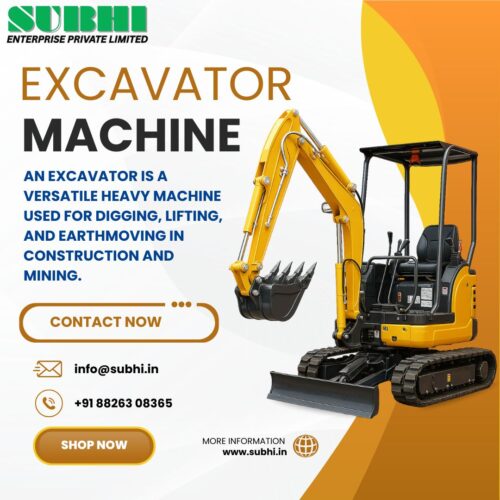
The Machine is one of the most powerful, versatile, and productive machines for construction, mining, roadwork, and infrastructure development. From excavating foundations to loading trucks, from land grading to breaking hard surfaces, an Excavator performs every given task with unparalleled efficiency, speed, and accuracy. Currently, contractors rely on this machine to handle various tasks effortlessly at the jobsite, as using it saves time and manpower while improving the quality of their work.
This guide covers all one needs to know about The Machine, starting from its types, working, and applications to advantages and buying tips. Whether you’re upgrading your fleet or planning to buy a new Machine, this blog will help you make an informed decision.
What Is an Excavator?
A heavy-duty earthmoving machine fitted with a boom, stick, bucket, and a rotating platform called the house. The excavator is mounted on wheels or tracks and designed to conduct digging, trenching, lifting, material handling, demolition, and land clearing, among others. The hydraulic power in a Machine ensures smooth and powerful operation; hence, it is among the most important machines at the site.
Types
Projects differ in their machine requirements.
The following are among the usual types of excavators used in different industries:
- Crawler
The most common form of excavator is the one having tracks, enabling the excavator to be stable on uneven ground. It is perfect for mining, heavy digging, and heavy construction work.
- Mini
Suited for small working areas, interior demolition, landscaping, and municipal projects, this compact excavator combines versatility with strength.
- Long-Reach
The excavator has an extended arm meant for deep digging and dredging, besides long-distance handling of materials.
- Dragline
It is used in large-scale mining and deep excavations.
- Wheeled
In place of tracks, this model of the Excavator has wheels, which come in handy in urban and road works due to their mobility and speed.
How a Machine Works.
It is powered by a strong hydraulic system controlling the boom, stick, and bucket movements. The operator inside controls the functions of the machine through joysticks and controls. The house of the Excavator can rotate 360 degrees, giving complete flexibility during operations. Advanced features of a modern Machine include GPS systems, load sensors, automation, and an eco-mode that saves fuel.
Applications
This versatility, in conjunction with Machine available attachments, makes it useful for a wide range of tasks:
- Digging and trenching
- Foundation excavation
- Breaking of stone and concrete
- Loading and unloading materials
- Land grading and leveling
- Mining and quarry work
- Dredging of rivers
- Demolition
- Landscaping
- Pipe laying
The Machine can be fitted with attachments, including breakers, augers, rippers, clamps, and grapples that extend its capability.
Benefits
The following are the benefits of using The Machine at the site:
1. High Productivity:
An excavator can perform tasks of heavy digging or lifting much faster compared to manual labor or smaller machines.
2. Versatility
One excavator can carry out many different tasks with different attachments without the need for other machinery.
3. Precision
Hydraulic controls allow the Machine to work with accuracy, even on tight or complicated job sites.
4. Durability
An Excavator is designed to withstand difficult working conditions and long hours without any loss of performance.
5. Cost Efficiency
A Machine is thus a lucrative investment because of faster work, less man-power, and decreased fuel consumption.
How to Choose the Right Machine
Factors to Consider Before Buying The Machine
- Job Requirements: The size and type of excavator are selected depending on the digging depth, lifting capacity, and working area.
- Attachments: Check which attachments are compatible with the Excavator to extend your task capability.
- Engine Power: A strong engine ensures smooth performance, specifically for demanding operations.
- Mobility: A crawler machine is a good option for rough terrains, while wheeled Excavators are best for urban work.
- Budget & Maintenance: Look for a machine that fits within your means but also confirms low maintenance costs and long-term durability.
Final Thoughts
The Machine is indispensable for any contractor or builder to achieve productivity, quality, and operational efficiency. From excavation in residential foundations to massive infrastructure projects, an Excavator brings power, speed, and versatility to each job. With the right choice and proper care, your Machine will be an asset in the long run, serving with excellent performance while yielding high returns on investment.