
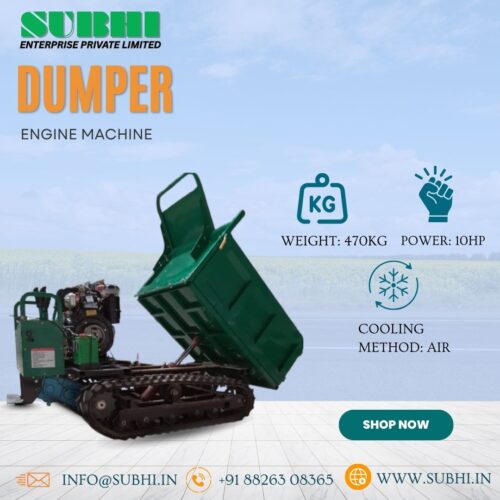
A dumper machine is one of the most essential machines in construction, mining, and infrastructure-related jobsites nowadays. Be it soil, gravel, sand, debris, or crushed material, all types of transportation are consigned to a dumper to ensure smooth material movement on every job site. Its speed, load-carrying capacity, and durability make it one of the important machines that any contractor uses day in and day out. This comprehensive, human-written guide covers all aspects of Dumpers, from types and working systems to the benefits, applications, buying factors, and maintenance tips. If you are planning to buy a Dumper or upgrade your fleet, this detailed 2000-word guide will help you make an informed decision.
What Is a Dumper Machine?
A dumper machine is a heavy-duty vehicle used for hauling and dumping bulky materials. With an open-box bed that is tilted by a hydraulic mechanism, the dumper performs both loading and unloading very quickly and efficiently. What could have been time-consuming with manual labor or small tools could be moved in quantity by a dumper within minutes to save time, manpower, and fuel.
A Dumper machine is mainly used for transportation purposes. In a construction site, there is always the movement of earth, aggregate, and waste materials. Using a Dumper, these tasks are able to be done more properly and safely by contractors. Whether it’s a small residential foundation or a massive infrastructure project, a Dumper improves workflow and boosts productivity.
How a Dumper Machine Works
A dumper machine works on the principle of mechanical power combined with hydraulic technology. The engine provides the power to move the machine forward, while the hydraulic system is what controls both the lifting and tilting of the box bed. Here is a step-by-step view of how a Dumper works:
Loading the Dumper
A Dumper’s box is filled with material through an excavator or loader, or manually.
Material Transportation
The dumper carries materials around the site. This provides great traction and stability on uneven ground. Hydraulic Tipping At the unloading site, a hydraulic system lifts the box, and the material is easily dumped out.
Return for Next Cycle
The Dumper quickly returns to repeat the process throughout the day.
This cycle makes the Dumper one of the most used vehicles on any site where materials need quick movement.
Types of Dumpers Machine
There are several types of dumpers used in different industries, and each has its particular task and project requirement for which it was designed.
- Standard Dumper
The most common type is used in construction sites for the carriage of soil, stones, and debris. A standard Dumper has a front-tipping mechanism and strong load-carrying ability.
- Mini Dumper
Compact Dumper for small construction sites, gardens, interior demolitions, and municipalities. Mini Dumpers fit into tight spaces where larger machines cannot operate.
- Articulated Dumper
The articulated Dumper has a joint between the cab and the dump bed that allows it to make sharper turns and have better maneuverability. Articulated Dumpers are ideal for rough terrains and mining sites.
- Rigid Dumper Truck
Large mining operations and large earth-moving projects make use of rigid Dumpers. These types of machines are huge, powerful, and designed for long-distance material transport.
- Track Dumper
The Track-type Dumper is fitted with crawler tracks instead of wheels. Due to this design, it will not slip even while operating on muddy, sandy, or uneven terrain.
Each of the Dumpers, according to the scale of work, terrain, and needs in material, will be useful.
Uses of a Dumper Machine.
Due to their versatility, Dumpers may be used in several sectors. Contractors find the Dumper indispensable since it relieves heavy material movement and raises work efficiency.
Construction Sites
The most common usage of a Dumper is on construction sites. It hauls soil, sand, gravel, and waste materials quickly, thus reducing the congestion on job sites.
Road and Highway Projects
Road construction involves the continuous transportation of aggregates, asphalt, and debris. A Dumper does this task efficiently and safely.
Mining and Quarry Work
Mining sites widely use a Dumper for moving ores, stones, and excavated materials.
Infrastructure Development
The Dumper finds its application in large projects involving dams, metro stations, flyovers, and bridges where material transport is required.
Demolition Operations
A dumper helps to clear rubble and waste after demolition activities.
Landscaping and Agriculture
This hand truck is used in farms and gardens for moving soil, mulch, and vegetation waste.
The great variety of applications makes the Dumper one of the most versatile machines in modern building.
Benefits of Using a Dumper Machine
The use of a dumper machine gains huge advantages in any job. Some key advantages are as follows:
- High Productivity
A dumper can carry a huge amount of material in a very short time. This, in turn, gives speed to the whole project.
- Versatility
From shifting material to the removal of debris, loading tasks can be handled correctly by a Dumper.
- Reduced Manpower
One Dumper does the work of multiple laborers, saving time and money with less effort.
- Safety & Stability
The design of the dumper ensures that operations on uneven or sloping ground are done safely, while keeping the operator protected.
5. Cost-Efficient
The Dumper is a very economical machine; it consumes less fuel, requires less labor, and finishes the job quickly.
- Durability & Strength
- A dumper is manufactured from high-quality steel with parts that can put up with harsh working conditions.
- A dumper is a long-term investment with fantastic returns in terms of performance and economy.
How to Choose the Right Dumper Machine
The selection of the right Dumper Machine is based on the following main points:
- Payload Capacity
Choose the appropriate dumper according to your estimated volume of material.
- Soil Condition
If the ground conditions are rough, either the tracked Dumper or articulated Dumper is best.
- Engine Power
More power means better performance, especially for mining or heavy-duty tasks.
- Mobility Requirements
The best dumper for the urban area is compact or wheeled.
- Budget
Get a dumper that your budget can accommodate but is durable enough.
- Maintenance Availability
After-sales service and easy spare parts are the keys to long-term reliability.
The right Dumper choice reduces the operational issues and generally improves the site’s efficiency.
Dumper Machine Maintenance Tips
- Good maintenance extends the life and performance of your Dumper.
- Check the hydraulic oil levels regularly.
- Clean the dump bed to prevent rust.
- Inspect tires or tracks for wear.
- Keep the engine serviced on time.
- Smoothen the moving parts.
- Check brakes and controls regularly.
A well-maintained Dumper runs well, saves fuel costs, and costly repairs are also avoided.
Final Words Dumper is one of the most crucial machines in any construction or mining operation.
In this respect, its capability for quick, safe movement of materials enables the contractors to remain on schedule with projects. A variety of Dumpers of different types, sizes, and configurations are found in the market; however, correct selection depends on job requirements, terrain, and load capacity.