
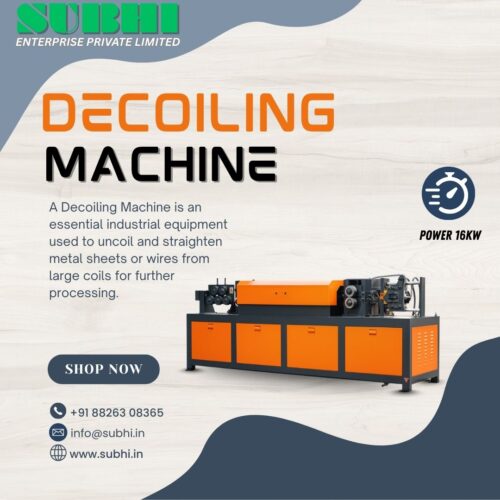
Efficiency, precision, and speed are the names of the game in today’s modern world of manufacturing and construction, where competition is very stiff. If your line of work has anything to do with the steel sector, construction, HVAC, fabrication, or metal processing, then there is one machine that has completely changed the game for any material handling: the Decoiling Machine.
Often in the construction world, there is a need for large quantities of steel sheets and wires, and the Decoiling Machine keeps the workflow steady, declutters costly hands-on labor, and improves overall production efficiency. It is industrial equipment used for uncoiling metal coils and feeding them into machines for processing.
In this blog, we’ll go over everything you need to know about the Machine and more. We are going to look into detail at the types, the principles behind them, the benefits, applications, the machines, the upkeep, and even the secrets to purchasing one. This blog is for the informed buyer, whether you are a contractor, workshop owner, factory manager, or someone in charge of procurement.
What is a decoiling machine?
Working principle: A machine, also known as a metal decoiler or coil-unwinding machine, starts its work by taking a huge coil of a metal sheet, wire, or strip and begins to unwind it. While doing this, it makes sure that the metal moves at a controlled pace to the downstream machines. The machine eliminates the chances of twists, tension, or interruptions in the transport of the metal.
The machine is the backbone of the production of industries that heavily rely on the continuous feeding of coils, including construction, automotive, appliance manufacturing, metal fabrication, and infrastructure sectors.
Why is a Decoiling Machine Important?
Many of the raw materials that go into a modern manufacturing production line are supplied in the form of a coil. This is because coils are easy to transport, cost-effective, and save space. However, coils cannot be used directly.
A Decoiling Machine ensures:
- Tangling Does Not Occur During Uncoiling
- Tension Control During Uncoiling
- Sheets are dispensed uniformly
- Production Accuracy is High
- Manual Pulling is Eliminated
All of the above are necessary in a production line to maintain a good pace of work. In the absence of a machine, the line will have gaps, defects, labor fatigue, and inconsistent output quality. There is no doubt that a machine is a must for any medium to large-scale fabrication setup.
Types of Decoiling Machines
Different industries need different setups of the machine based on their production needs
- Manual Decoiling Machine
This is the classic type of machine. Because it is low volume, it is great for small workshops or fabrication units. It is inexpensive and user-friendly.
- Mechanical Decoiling Machine
This is an improvement on the previous type. It uses a system of gears and motors for a more fluid uncoiling. This machine works best for operations on a small to medium scale.
- Hydraulic Decoiling Machine
This type is able to lift larger coils of material and has automatic adjustable tension control. This type of machine offers a fast production environment and high stability.
- Double-Head Decoiling Machine
This type of Decoiling Machine allows for continuous feeding of material. This enables the operator to unclamp one coil and set up a new coil while the other coil is uncoiling. This system is more productive.
- Automatic CNC Decoiling Machine
It is designed with servo motors, position sensors, and sophisticated control systems to meet high-precision industrial needs, such as automotive and electronics.
How does a decoiling machine work?
Knowing how a decoiling machine works helps us understand how good and efficient it is. They work like this:
Step 1: Coil Loading
With the help of a crane or a forklift, a coil is placed onto the mandrel of the machine.
Step 2: Mandrel Expansion
The mandrel expands, and either hydraulically or mechanically, it locks the coil into position.
Step 3: Initial Feeding
The starting edge of the coil is pulled out and is fed into the machine.
Step 4: Controlled Uncoiling
The machine starts spinning, and then the coil is uncoiled at a steady pace.
Step 5: Tension Adjustment
Some newer models of the machine have automatic tension controllers to help keep the sheet from being bunched up and feeding smoothly.
Step 6: Continuous Operation
The machine keeps at the same pace, and as long as the machine it is feeding into needs more raw material, the decoiling machine will keep uncoiling at a steady rate.
This helps keep the production line running smoothly and helps to save a lot of time.
The Key Components of a Decoiling Machine
Now that we understand the work of a machine, let us take a look at its major parts.
Mandrel or Drum – Holds and expands to grip the coil. Frame Structure and Function
The frame is the backbone of the machine, which supports every part and keeps the whole system solid. The motor turns the drive, while material expansion is dealt with by the hydraulic unit, taking up the load. A safety brake keeps overspin in check and protects both the machine and operators. The control panel gives a clear view of the process, while the tension control unit maintains a smooth, steady sheet flow. In brief, every piece of the decoiling setup works together to deliver reliability and performance that, in turn, underpin brand trust and quality.
Benefits of a Decoiling Machine on Your Line
- Higher productivity
The machine feeds material to the downstream equipment faster than the line’s own tempo, reducing downtime and increasing output.
- Less manual handling
Automatic feeding of the coil improves safety and reduces the physical demand on personnel.
- Greater accuracy
Consistent feeding reduces material waste, helping to maintain tight dimensional control.
- Greater safety
Compared with manual uncoiling, the machine provides more safety due to safety brakes, automatic tension control, and a solid frame.
- Multi-Material Flexibility
A decoiling machine can handle sheet metals, wires, strips, stainless steel, aluminum, and more.
- Long-Term Cost Savings
A machine saves more, by way of lowered labor costs and reduced waste, though it may be more expensive upfront.
Uses of Decoiling Machines
For its versatility, the machine performs its tasks in a range of industries, including:
- Steel production companies
- Construction and civil engineering
- Metalworking shops
- Manufacturing of the car body
- Production of air conditioning ducts
- Manufacturing of roofing sheets
- Factories for electrical appliances
- Warehouses and plate service centers
- Precision engineering companies
Any industry that receives its merchandise in coils will utilize a machine.
Features to Look for in a Good Decoiling Machine
The following are things to consider when looking to purchase a decoiling machine:
- Coil Capacity
Make sure the unit can handle your coil’s weight and width.
- Motor Power
A more powerful motor will provide faster, easier uncoiling.
- Mandrel Expansion
Hydraulic expansion is best suited for heavier coils.
- Speed Control
Look for variable speed control so that the machine plays well with downstream equipment.
- Build Quality
A sturdy, heavy‑duty frame keeps everything durable and steady during operation.
- Level of Automation
Fully automatic CNC-controlled systems can push productivity even higher.
- Safety Features
The important safety additions are overload protection, emergency stop, and pneumatic braking.
How to Maintain a Decoiling Machine
A little regular maintenance goes a long way for your decoiling machine. Keep the mandrel and other moving parts well-lubricated, and maintain a full hydraulic reservoir.
- Check that bolts are tight and the frame remains aligned.
- Clean out dust and metal chips from the machine.
- Perform regular checkups on the brakes, tension system, and other vital components.
- Most shops find it beneficial to perform maintenance once a month.
When you take care of it, a decoiling machine remains in like-new condition for many years and functions with reliable, trouble-free performance.
Common Problems & Solutions
Even top‑tier decoiling machines will present some issues, though they are rare. Here is a breakdown of common issues and their solution:
- Coil Over‑Spi
Solution:
Adjust the braking system or switch to Automatic Tension Control.
- Material Jamming
Solution:
Ensure proper alignment and clean the feed path.
- Vibrations
Solution:
Stiffen the frame and tighten the foundation bolts.
- Non‑uniform Uncoiling
Solution:
Check coil placement and verify proper mandrel expansion if required. If you follow these recommendations, over the long term, the machine will run with less downtime.
Expert Buying Tips for the Best Decoiling Machine
- Identify Your Production Volume – High-volume operations require hydraulic or CNC automated models.
- Coils to be reviewed specifications: weight, width, inner diameter, and material.
- Choose the correct power system: select either electric or hydraulic, depending on your needs.
- Check out different brands first: You’ll want to find different brands to find good manufacturers and reliable brands that offer good after-sales support.
- Make Sure the Machines Match: When purchasing a decoiling machine, consider what cutting, slitting, or forming machines you will be using.
- Heavy Coils and Safety: Make sure to look for machines that offer safety features, especially if the coils you will be using are heavy.
- Think of the Savings: Think of the long-term savings ROI before you make a decision.
Consideration of all the advice given above will help you find the right decoiling machine for your company.
Conclusion
Every company engaged in fabrication or manufacturing with coiled materials uses a decoiling machine. These machines increase efficiency, safety, and productivity overall. If well-maintained and with good machinery, your workflow will improve significantly, and it will be a valuable addition to your operation. If you’re going to purchase a decoiling machine in 2025, make a decision about the type you want, its capacity, and its features, keeping in mind how automated you want it to be. An excellent-quality decoiling machine not only raises output but also supports consistent quality and long-term profitability of your company.