
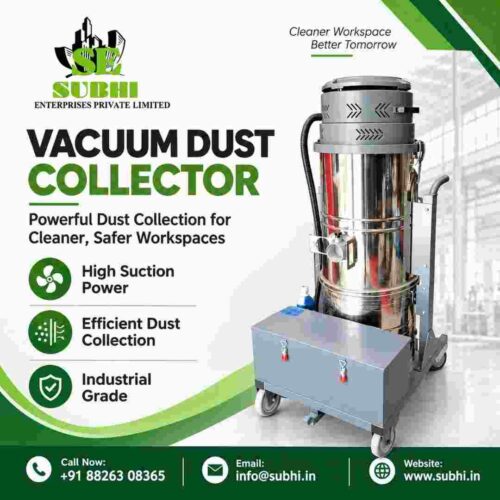
Shops, construction sites, factories, and other industrial establishments generate fine dust that pollutes the environment and can affect the performance and cleanliness of equipment. An innovative solution for such dust control problems is a Vacuum Dust Collector Machine.
An advanced Vacuum Dust Collector Machine can easily suck dust and dirt from floors, machinery, and working areas. Based on the model and characteristics of the application, these machines are suitable for routine cleans as well as heavy-duty collection of industrial dust.
Any industrial professional will appreciate owning a dust collection system that enhances workplace cleanness and simplifies their cleaning chores. In this writing, we will examine how a Vacuum Dust Collector Machine works, the benefits associated with its use, applications, how to maintain it, and what considerations to make while purchasing one.
How Does a Vacuum Dust Collector Machine Work?
A vacuum dust collector machine sucks all loose dust and dirt and other materials from the working area using strong suction.
The old-fashioned ways of dust controlling that involve broom cleaning and other manual activities result in a considerable amount of dust getting dispersed in the air, but with a Vacuum Dust Collector machine dust particles are removed from the workplace air and make the air cleaner.
A Vacuum Dust Collector machine is comprised of such elements as a high-speed motor, suction system, filters, collection container (or dust bag), hose and various accessories. When it works, the machine starts to operate the motor that generates a suction, pulling dust and other debris into the hose. After that the collected debris passes the filtration system and ends up in the collection container.
Based on the use the machine may be designed differently and has the capacity of various size.
How Does a Vacuum Dust Collector Machine Work?
The principle is quite simple but efficient.
In the first place the suction system operates with the help of the motor, generating negative pressure in the machine. The moment the suction hose is brought close to the dusty surface, the dust, debris, dirt start to move through the hose because of the pressure difference.
After that the collected material moves to the filtration system where
- When the container holds waste to its capacitor, it is removed and discarded.
The overall process is:
Suction → Dust Collection → Filtration → Storage of Waste → Exit of Clean Air
This simple working principle makes Vacuum Dust Collector Machines effective in industrial and non-industrial cleaning.
Feature Overview of A Vacuum Dust Collector
Different models vary in their details, but certain important features remain consistent in evaluating a given machine.
- Powerful Suction
The first feature concerns suction power. A machine with powerful suction is capable of collecting not only larger but also finer material.
Industrial machines are used for the collection of materials in significant quantities.
- Efficient Filtration Mechanism
The efficient filtration mechanism is important in the machine because it assists in preventing any escape of the retained material back into the atmosphere.
- Large Collection Capacity
The large collection capacity is needed in machines which are used in industries in order to collect material in large quantities daily.
- Easy Mobility
Adding features such as a body with a compact design or installing wheels on a machine enable the user to move the machine around a construction site, workshop, or factory.
- Durable Build
Since the operating environment of these machines is quite challenging, durability of build and quality of components are some of the most important attributes of any machine.
- Easy Maintenance
Keeping things simple, especially components like the filter, collection unit, tubes, and others, ensures that maintenance of a machine is easy, and reduces maintenance-related downtime unnecessarily.
Benefits of Having a Vacuum Dust Collector Machine
As a business or industrial user, several benefits arise from purchasing a Vacuum Dust Collector Machine.
- Improves Cleanliness of Workspace
Vacuum cleaners are a quick way of removing dust from surfaces and equipment. This includes reducing dust build-up and a more distinct and organized workspace.
- Better Efficient Dust Removal
Dust is a fine particle which, during normal sweeping and collection, easily disperses into other areas. This is eliminated with vacuum-collect dust machines which effectively draw dust into the collection machine.
- Less Time Consumed
Cleaning work areas is much easier to complete with a dust collection vacuum rather than doing it manually.
- Ease of Use with Various Machines
Because of the versatility of these machines, you can use them in various places including construction, manufacturing, wood, and fabrication workshops, commercial, and even warehouses.
- Benefits Equipment
A vacuum cleaner collects dust around machinery, motors, and electrical parts, keeping them clean and free of dust accumulation.
An investment well used.
- Increased Cleaning Productivity
With the productivity boost from the workforce focusing on the said primary tasks and the cleaning process being faster, machines now have improved overall productivity in commercial and industrial facilities.
How Different Industries Use Vacuum Dust Collector Machines
Vacuum dust collector machines have various applications in many industries
- Construction Sites
Activities associated with construction events can produce dust that includes dust from mixing, drilling, cutting, grinding, and many other related activities.
- Workshops
Activities in engineering fabrication can generate metal dust and chips. Vacuum machines can be used to contain dust and maintain order in work spaces.
- Woodworking Industry
Woodworking operations, including cutting, drilling, sanding, or other related activities, can produce large volumes of dust that require efficient dust collection systems.
- Factories
When various processes are carried out in a factory, there may arise the need to mix up the production wastes with dust that needs collecting.
- Warehouses
There could be dust and dirt in warehouses, especially in places where there is much activity.
Vacuum machines can help with routine cleaning.
- Automotive Workshops
Workshops that perform automotive repairs can generate dust and dust from workshop activities.
- Large Buildings
Large buildings can employ industrial vacuum systems for cleaning.
Vacuum Dust Collectors Compared to Conventional Methods of Dust Control
Dust control through sweeping and collection of dust is appropriate in a number of situations. However, vacuum collection has an advantage where fine dust needs to be efficiently collected.
| Feature | Vacuum Dust Collector Machine | Traditional Sweeping |
|---|---|---|
| Dust Collection | Direct Suction | Manual Collection |
| Fine Dust Handling | Generally Better | Can Disturb Fine Dust |
| Large Area Cleaning | Faster With Suitable Equipment | Time Consuming |
| Physical Effort | Low | High |
| Mobility | Easy With Wheeled Models | Manual |
| Industrial Applications | Highly Suitable For Appropriate Models | Limited |
| Cleaning Consistency | Generally Consistent | Depends On Operator |
The right choice ultimately depends on the size of the workspace, the type of waste, the cleaning frequency, and the operating requirements.
How to Choose the Right Vacuum Dust Collector Machine
There are some factors that should be considered when choosing a vacuum dust collector machine. The first and perhaps the most important factor is the type of dust or material. Different types of dust may require different filters or different collecting systems.
- Consider the Suction Performance
The suction performance should also be considered. Light commercial dusting machines may not be appropriate for industrial uses.
- Consider the Collection Capacity
The capacity of the machine to collect dust should be considered. The collection capacity should be adequate enough to minimize the number of breaks to empty the machine.
- Filter Quality
The filters of the dust collector machines should be of good quality and should be suitable for the material to be collected.
- Operating Environment
If the machine is to be used on a construction site, workshop or factory floor, then a machine should be easy to move but should not sacrifice durability.
- Evaluation of Power Requirements
Verify the electrical requirements of a machine before purchasing, and ensure that the power supply is available.
- Ease of Maintenance
Consider the ease of maintenance of a machine for the period you wish to use it.
- Check Spares and Services
Find out about spares, filters, service support, warranty, and post sales support before the purchase is made.
Maintenance of a Vacuum Dust Collector Machine
Regular maintenance ensures that the performance is optimal and the lifespan is extended.
- Regular Cleaning of the Filter
Picture an obstructed filter. It can affect the airflow and suction power. Therefore, follow the filter cleaning instructions.
- Timely Removal of the Dust Collector
Do not allow the collection container to be overloaded, remove it based on the operating instructions.
- Check the Hose
Check the suction hose for cracks, blockages, or damage. An obstructed hose also affects performance.
- Loose Connections
Leakages reduce the suction power. Therefore check the hoses and clamps for looseness.
- Keep the Machine Clean
Dust the machine body and the surrounding components.
- The Manufacturer’s Instructions Are Critical
Always follow the instructions received from the manufacturer.
Why Businesses Should Invest in Effective Dust Collection Systems
In an industrial environment, dust management should be about avoiding a messy workplace. It should also be about improving overall productivity.
Cleaning through the use of a Vacuum Dust Collector Machine is very simple. Manual sweeping is no longer required since workers can make use of mechanical suction for dust removal.
For firms that generate a lot of dust, investment in machinery can also decrease the cleaning time.
In relation to dust collectors, it is important to choose the correct machine for the task at hand. It should be able to provide the correct suction power, filters, and build to collect the dust.
Vacuum Dust Collector Machine – FAQs
- What is a Vacuum Dust Collector Machine?
A vacuum dust collector machine is a machine that helps in collecting dust, dirt, debris, chips, and other unwanted materials from an industrial, commercial or construction setting.
- How does a Vacuum Dust Collector Machine work?
This type of machine has a hose and container or bag. It works with a motor to provide a vacuum that will suck dust and debris. When the hose and machine container or bag get filled, it will be filtered by the filters.
- Is a Vacuum Dust Collector Machine applicable in a construction site?
The right models of the machine can be used on a construction site for the collection of dust and debris that result from activities like drilling, sawing, grinding, and other related tasks. The machine should be selected depending on the material and application.
- Can a Vacuum Dust Collector Machine collect fine dust?
Many of the available machines have the ability to collect fine dust. Fine dust collection is dependant on filtration systems. The machine used should have a filter designed to collect fine dust.
- How often should the filters be cleaned?
It depends on the dust load, the operation of the machine, and the machine design. With higher intensity of machine operations, it will be necessary to clean filters more often. Do not forget to follow the recommendations of the manufacturer.
- What shall I pay attention to when buying a machine?
The factors which are crucial include suction, effectiveness and quantity of filtration system, capacity, engine, portability, construction, energy consumption, and maintenance.
- Can dust collectors be used in woodworking shops?
Yes, it is possible to use them for collecting sawdust. Various designs of dust collectors can collect dust and other byproducts of woodwork. The right choice should be made considering type and volume of the dust.
- Do vacuum dust collector machines require maintenance?
Yes, there is the necessity to perform filter cleaning, cleaning from dust, checking of hoses and other cleaning operations in order to preserve performance of the machine.
- Would a larger dust collector always be a better choice?
Larger collector would always be a good choice but it would not be necessary always. The best possible dust collector would be the one that matches the dust collection at the location. A smaller unit may cause over-collecting of dust, which will require regular dumping of dust, while a larger unit will increase collection cost and wastage of power.
- Where can I buy a machine in India?
The best unit is selected by comparing the application, the machine specifications, warranty, spare parts, after sales support, and the overall reputation of the supplier.
Final Thoughts
Take your business to the next level by investing in a Vacuum Dust Collector. Whether you are from the construction industry, workshop, factory, warehouse, woodworking industry, or any other professional use where dust and debris are created and generated on a regular basis, this machine will be of good value to you.
This model has a controlled suction system that vacuums dust and waste, eliminating the need for manual sweeping. It makes the cleaning process more efficient while reducing the effort required in physical sweeping.
In case of buying the Vacuum Dust Collector Machine, it is advisable to buy according to the application as opposed to price. Power, suction and filter strength, capacity of the collector, design of the machine, portability, maintenance requirements and post-sale customer support are all vital considerations.
With proper maintenance, the Vacuum Dust Collector Machines can be used daily for cleaning dust in diverse professional settings.